Tag: Issue 1

  • The Darjeeling Limited


    Strangers on this road we are on.

    Before Eat, Pray, Love, there was The Darjeeling Limited

    Okay, not a very sound analogy. But The Darjeeling Limited (2007) seemed like one of those films you had to watch during a stay in Nepal. Just as The Beach is to Thailand I thought The Darjeeling Limited is to the subcontinent. Disheartened by Leonardo Dicaprio’s romanticised affair with a secret paradise in The Beach, I was ready for the long played out Hollywood drama of American goes East on proscribed travel book soul searching mission. The only saving grace is that The Darjeeling Limited is after all a Wes Anderson film, yes the Wes Anderson of The Royal Tenenbaums fame, so perhaps it couldn’t be all bad.

    As expected, The Darjeeling Limited follows all the conventions of your typical travel drama; three bumbling brothers, an exotic subcontinent destination and a spiritual journey of self-redemption and enlightenment.  Fortunately and unexpectedly, though, that is where the clichés end. From the opening slow motion sequence of Peter running to catch up with his brothers already waiting on the train, to the quick reunion, the absurdity of Francis’s head injuries and the awkward declarations of brotherly love, The Darjeeling Limited reminds us that it is not the destination but rather the people and the journey that define who we are and how we cope.

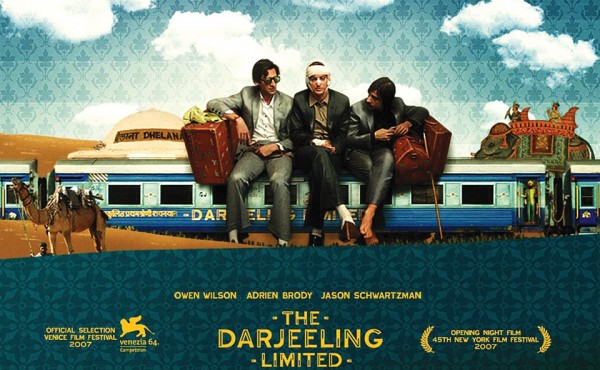
    Francis (Wilson), Peter (Adrian Brody) and Jack (Jason Schwartzman) capture your imagination for 107 minutes of atypical and unpredictable adventure.  Endeavouring to finally heal from the death of their father and seek answers from their Catholic missionary mother, the trio embark on bonding journey to India, limited edition Louis Vuitton luggage in tow. Representing the emotional baggage weighing each of the brothers down, a serious of mishaps see them removed from the train and left in the middle of the desert. Anderson skilfully plays upon his common motif of the privileged family with long pan shots of the suited brothers trudging in the desert. Displaying a maturity in his work, Anderson builds on the theme in this film indicating that wealth cannot indeed buy happiness, sanity or a sense of belonging.

    The recent novel and subsequent film success of Elizabeth Gilbert’s Eat Pray Love reflects an often western idealism of soul searching in far flung locations, adopting practices and a lifestyle far different from one’s own. Again, true to his style, Anderson subtly subverts the burgeoning journey genre, the soft satire making a mockery of your usual life changing, ashram seeking hippy. Indeed the characters perchance for over the counter pain killers and Indian flu medicine reflects their disconnect from the ‘all the spiritual places and temples’ Francis has so meticulously planned that they ‘need to see’. The magic of the film lies in the quirk of each character, a melting pot of modern mental health ailments which are in the end not cured by all the medicines or the pilgrimage sites but rather the death of a young boy. This in turn forced the bereaved brothers to confront the reality of their father’s death.

    In one of the most poignant scenes, the brothers make their way to the young boy’s funeral. With the Kinks 1970’s classic ‘Strangers’ playing in the background, they emerge from a hut dressed appropriately in white. The long pan shot depicts a sense of collectiveness among the different which reminds us ‘we are not two, we are one’.

    The Darjeeling Limited makes you laugh, but not as hard as I thought, it makes you cringe when they just get culture plain wrong, it makes you cry out of raw humanity for the brothers, and it makes you reflect upon your sense of place in a world where we are all struggling to find an identity.
  • Pride and Prejudice

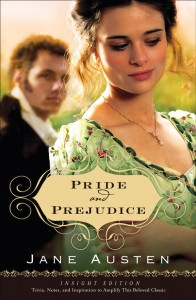
    Pride and Prejudice by Jane Austen is undoubtedly one of the best pieces of literature written till date. Set in the 19th century, it presents the then era, people’s way of thinking and the social aspects. As in all her other novels, Austen has established female characters as the main protagonist. This book tells us the story of the Bennet family, a family of five daughters, Jane, Elizabeth, Lydia, Kitty and Mary. Back in those days, the only thing expected from a lady was to get married with a well-settled gentleman. As we go on reading, we can see Mrs. Bennet’s woes that her daughters might not lead a happy life in the future, her endeavors to get her daughters married properly and the girls trying to lead their own life. It is said that the tragedies Austen had to face during her life have a great effect on her writing. The love among family members, the caring for one’s siblings has been portrayed beautifully. The bond between Mr. Bennet and his daughters, especially Elizabeth and the understanding between the two eldest Bennet girls can be felt while reading. Shy and extremely beautiful Jane falls hopelessly in love with Charles Bingley, the most amiable and eligible man. Independent and stubborn Elizabeth thinks of Mr. Darcy, the handsome and very wealthy Mr. Darcy, who falls in deeply for her, as nothing more than a haughty and unsociable man. And to add to their problems, there is Lydia. Among all this, the girls’ search for true love rather than just a beneficial marriage continues. Some of my personal favorite parts to read in the book are Mr. Darcy’s letter to Elizabeth, the conversation between Lady Catherine and Elizabeth at the Bennet house and the conversation between Elizabeth and Mr. Darcy almost at the end. The change of initial prejudice along with the passing events can be noticed easily and it makes the story more interesting. As it was written in the 18th century, the language and the way it has been written might be bit difficult to comprehend sometimes but the pleasure obtained from reading the book overshadows it. For all the book-lovers out there, this is a must-read novel, one you should definitely not miss.


  • Giant Steps : Jazz Everywhere

    — Ofelia T. Sta. Maria

    Outside a small, nondescript bar in Thamel, a tourist district in Kathmandu, Nepal, is a handwritten window sign saying ‘live jazz.’ Not exactly a conventional sight in a place dotted with souvenir shops, trek agencies, and guest houses’”a stretch of street where life seems fleeting, hundreds of voices speak in different languages, and a cavalcade of travelers will eventually leave at one point.

    I entered Full Moon bar, and knowing Thamel to be a place for tourists and backpackers, assumed that it would be filled with foreigners like me. I was right, but the sight of a local audience was a welcome reprieve and presented a positive omen. The atmosphere offered a stark contrast to the transient bustle of outside ‘”hued cushions and pillows to sit on, incense sticks burning in corners, cigarette smoke rising from ash trays, opened windows inviting the cool wind of spring, beer bottles, glasses of alcohol. While outside Thamel was all about passing and moving, inside Full Moon, it said SIT.

    The place was very interesting, not only because I was there as a tourist, but because I hadn’t really gone to similar events in the Philippines. I did not know what to expect.

    Jazz in Nepal

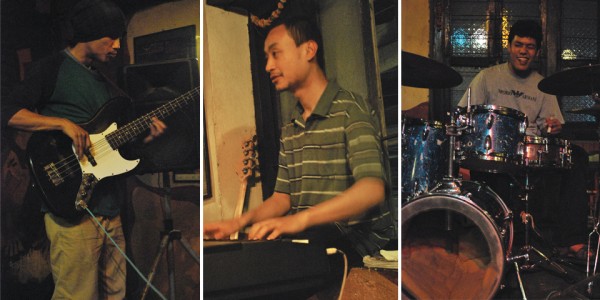
    Coexisting with Nepal’s already rich culture is an underrated music scene that deserves attention and appreciation from listeners all over the world. On my visit to Full Moon, I met Abhisek Bhadra, keyboardist of jazz group JCS Trio (with Jigmee Dorgee Sherpa on bass and Kiran Shahi on drums), the band playing that night. I’m not an expert on jazz, but the moment I went inside, I knew that these guys were good.

    Abhisek said that the jazz scene in Nepal is slowly gaining ground. It only started to develop about five years ago, when there were only about two bands playing jazz music, ‘and not many people who attended those gigs,’ he said.

    ‘It’s hard enough making a living out of music in Kathmandu and it’s definitely harder making a living by playing jazz. There aren’t many bands who’ve made jazz records here,’ he admitted. There is, however, a lot of improvement’”which shows that the scene could only get better.

    He told me about the Kathmandu Jazz Conservatory, a major initiative that helped jazz bloom in the country: ‘It was founded by Mariano Abbelo, a Spanish music educator. He was able to bring teachers from abroad to teach students here, and he’s still doing the same.’ This school benefits artists like Abhisek, because he gets to teach kids how to play’”while currently training at the conservatory, he teaches guitars, keyboards, and music technology at the British School in Kathmandu.

    Today, there are weekly jazz gigs in different venues in Kathmandu, and occasional jazz festivals, which I unfortunately missed. He mentions ‘Jazzmandu,’ an annual jazz festival that gathers musicians from all over the world. ‘The festival started about six years ago. It wasn’t very big back then but now [the number of] people attending this festival has grown,’ he says.

    Learning about all of these things, I reckoned that the jazz scenes in the Philippines and in Nepal are very much similar.


    Jazz in the Philippines

    The influx of new music in the Philippines could make it a bit trickier for jazz, partly because it’s become clear that it is one of those genres that is not easily and immediately appreciated by everyone’”an acquired taste as some would call it’”and partly because the dominant music we have for the youth in Manila commonly leans more towards rock and pop.

    ‘No matter which decade we’re talking about, jazz has always been considered an elite music,’ said Collis Davis, one of the producers of the documentary ‘Pinoy Jazz: The Story of Jazz in the Philippines.’

    He also believes that we are currently living in a time where jazz is not as well-received in the country as it should be. ‘Listening to what I would like call real jazz is more demanding of the listener’s intellect, especially when it comes to following the spontaneous, often brilliant logic of improvisation composed on fly on a theme or on a song’s harmonic structure,’ he explains.

    He also suggests that guidance is an essential component in finding out what jazz is all about, and that it could be difficult for new listeners to look for a good introduction’”it is possible that they get the ones that are ‘either too abstract or, if it’s conventional jazz, poorly executed.’ Educating oneself with sound is clearly one of the things that jazz listening requires. ‘Where it needs to be taught is at the high school level while young minds are still receptive to new ideas and the performing arts in general,’ he added.

    ‘Usually, the way one learns to listen and enjoy jazz is to associate with folks who are already into the music. They can serve to introduce the novice into how to listen to jazz, and share recordings by the jazz masters to enable the novice to engage with the best examples in the history jazz. This is key’”introducing novice listeners to excellence in improvised music, either American or Filipino in origin guarantees their life-long dedication to the music.’

    Filipino Jazz music made for and by younger generations has been doing pretty well for years. Artists such as The Radioactive Sago Project, Mishka Adams, SinoSikat?, Nyko Maca, and Mike’s Apartment each have their own distinctive jazz sounds, providing listeners with new approaches and fresh technique on the old tradition. The recently-concluded Philippine International Jazz Festival has also shown that the scene is more powerful than ever.

    ‘As the PI Jazz and Arts Festival grows each year, I would surmise that the music is gaining more attention among youth audiences due to the many free concerts that are staged around town,’ said Davis.

    Aaron Gonzales of contemporary jazz pop band Hidden Nikki said that there are no problems with regard to album sales and gigs. He said that the records do sell, but they are still outnumbered: ‘Jazz in the Philippines is like jazz in any other country. It is appreciated by people but is still part of a minority. There are fans and followers but of course, not as strong as alternative or rock,’ he explains.

    ‘Jazz survives because it is one of those genres that never die. Despite constantly not being the current fad, it’s always there unlike Rap Metal, and ‘acoustic’ that pretty much went down the popularity scale years ago. It is a timeless genre.’

    Firm, giant steps

    Heading out of Full Moon after the JCS set, I was beaming with excitement and new material for an artile that was originally supposed to feature the jazz scene in my country. I was lucky to catch a glimpse of a burgeoning jazz community in a country that already boasts so many wonderful things.

    Jazz, in places such as the Philippines and Nepal, is like the dark alley of guest houses and closed shops. Tucked away in corners is a scene that may not be as loud as the rest of the place, but is powerful enough to make you sit, stay, and listen.

    First published in the Philippine Online Chronicles (https://www.thepoc.net). Licensed under Creative Commons BY-NC-SA-3.0 Philippines (Attribution-Noncommercial-Share Alike).


  • Jamarko – The Little Store that Did

    The stench of rotten garbage breeding inside a sea of black plastic rises from the murky river waters. Dogs try to lap a drink, but meekly retreat unable to satisfy their thirst. The flow from upstream becomes clogged, entangled in dams of food scraps, discarded bottles and decomposing paper mountains. Embedded in the feeble footpath that snakes along the bank, wisps of white and black catch your eye, relics of a daily shop some three years prior. A passerby looks disapprovingly at the mess below, covers their face with a scarf, scrambles by and then breathes a sigh of relief. The sigh is inherently also one of complacency, for it is their garbage too poisoning the river, it is their choices ultimately contributing to this environmental degradation.


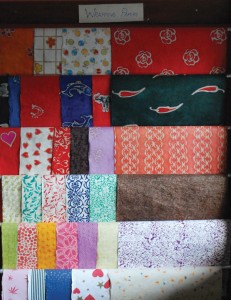
    Across town in Jhamsikhel, a small but dedicated team is working on creating newspaper carry bags and 100% recycled paper products. The store, Jamarko, seems a world away from the inescapable pollution that saturates Kathmandu and her environs. Yet within the confines of the small wooden shop revolution is taking place. It is environmentalism and recycling at its best. Specialising in handmade recycled paper goods, it is possible to see how waste can be transformed into practical use. Notepads, journals, writing paper, envelops, stationary, lampshades, paper curtains, cards, coasters, photo frames, gift wrap and gift bags are among the main recycled paper products. The store also carries a selection of mostly handmade giftware utilising natural fibres such as hemp bags, corn husk dolls, husk stools and felt laptop bags. The product designs reflect a refined and simple elegance.

    Although established in 2001 Jamarko initially ran out of its factory site in Galkopakha. Now, after 10 years of operation, a space has emerged for this pioneering eco-business to enter the mainstream. The showroom itself is a reflection an intimate niche market of overseas visitors and environmentally conscious Nepali youth. A 2010 study by the Dept. of Environmental Sciences and Engineering at Kathmandu University reveals that, beyond being a trendy fad, recycling is also a form of income generation and employment, particularly for low income earners. Indeed Jamarko’s social entrepreneurship extends to employing disadvantaged women, the disabled and street children.  Rural communities also benefit from their work in producing Lokta paper products. The specialised and made to order Lokta paper products generates the financial stability for Jamarko to pursue more localised recycling objectives.

    The reach of Jamarko’s message is, however, beyond recycling paper and reducing plastic waste. The parable lies deep within the heart of a movement to create a sustainable, safe and more liveable environment.  It lies within the passion and commitment of a dedicated few who can see beyond today, envisioning a cleaner and greener tomorrow. It lies within their belief that every little bit counts. Looking down at the river or into a field littered with waste, it is hard to find the motivation to change entrenched practices. Ignore the masses. Do your bit. Lead by example. Jamarko, after all, is effort.

    Every one of us has the potential to put in the effort and become one of those few. It doesn’t take much; Simple decisions like refusing a plastic bag for small goods which could be easily stowed in the backpack or handbag you are carrying; Popping in a reusable shopping sack in your everyday bag so when you are at the store, even on unplanned occasions, you are prepared with an alternative to plastic; Recycling paper products such as newspapers, bygone study notes or that empty biscuit box from afternoon tea; Setting up a small recycling station at home, work or college and once a week dropping the paper of at Jamarko or a similar concept store.  Change is within everybody’s means. When will you start?