Tag: Issue 4

  • Harry Potter and the Deathly Hallows Part II

    When the best is left for last.

    It is sad for a Harry Potter fan like me that it all ends with the Deathly Hallows II. There goes the anxiety and the excitement which arrives with the release of the each movie of the series. But it is probably for the best. It is always better when we know the right time to let go off things we love. So there I was in the houseful theatre eagerly waiting for the beginning of the end.

    The finale of J.K Rowling’s Harry Potter and the Deathly Hallows had been split into two parts. While the first part was slow, with Harry, Ron and Hermione grasping at the straws, struggling with their friendship and their lack of direction, the second part is fast paced and has shown the trio’s bond stronger than ever. The finale is a treat for all the committed Harry Potter fans and it can also put the new comers in their seat.

    The movie is just over two hours in length, making it the shortest of all the Harry Potter series but still the best so far. The story picks up just where the first half ends. The three sorcerers are on their quest for the remaining horcruxes, objects that contain pieces of Lord Voldemort’s dark soul. During the search, the trio find themselves in dangerous situations, managing escapes and donning disguises. All the action is set at a tremendous pace which succeeds in giving one an adrenaline rush, but it also comes with the ever-so-prized special moments of the beloved characters. There are the classic punch lines which we are accustomed to in a Potter film, in addition to those magical moments like the kiss between Ron and Hermione. Director David Yates has not failed to give us those shining instances that we so adore. The escape from Gringotts on a dragon is simply breathtaking and the final battle at Hogwarts is totally epic. Every actor has played his/her part marvelously, as they always have. Ron and Hermione are at their best and so are the rest of the Hogwarts members. We have seen the trio literally grow up on screen and they have matured not only as wizards but also as individual actors in their own right.

    As the last film of seven, The Deathly Hallows Part II reveals all the secrets we have been waiting to hear. The pieces of the puzzle finally come together and give us the whole picture. Severus Snape’s character comes in a whole new light and he emerges as one of the heroic figures rather than an evil one. There are many surprises in store, the greatest being one particular memory of Snape’s which not only reveals a lot about his character but also serves as the crucial fact during the battle. Alan Rickman has given a heart-wrenching performance which is one of the most memorable of all time. There is Dumbledore’s as well. Since the sixth film, we were presented with a more allusive side of the Hogwarts headmaster wherein more questions were raised than those answered. The Deathly Hallows Part II again elucidates those secrets from Dumbledore’s past. This part shows Neville Longbottom’s character to be more than just a background comic slapstick. While Harry has been destined to greatness, Neville had to work of it. The unsung hero, who almost became the chosen one, is instrumental in supporting Harry and finally gets his moment of glory, and what a moment indeed (the entire theatre was filled with applauses, so you should get the idea).

    But then again it all comes to the epic battle between Harry and Lord Voldemort. This isn’t just a fight between these two, but between good and evil. Hogwarts is immersed in battle where teachers, students, ghosts even the armours play their role. During the darkest time, there is no separation of houses, students from all the houses (excluding Slytherin house, obviously) unite together to save their school as well as their world. There is a lot of death and destruction during this historic battle. Hogwarts falls and crumbles, only to rise back up of course. Technically, I don’t think the 3D effect was necessary. The movie was magnificent in itself and the 3D didn’t serve much. And, well if you know the book by heart and want to see every detail as it was described, you might be a bit let down during the battle. But, then again, the whole book can’t be shown in a movie and the modified parts have only made it a more exciting watch. One of the prevailing themes of all the Potter films is that love- real, strong, genuine love- can overcome adversity and ultimately protect you from evil. No one will be disappointed in the scene between Harry and his parents where we are at once confronted with a great sense of emptiness but also a resounding comfort knowing that Harry has never been alone.

    Overall the movie is a roller coaster ride. It has its high and its lows, there are twists and turns. It is thrilling and scary but when the ride is over you want to go through it all over again. A great movie and one of the best finales of all time. Harry Potter has indeed ended but it has left with a BANG!
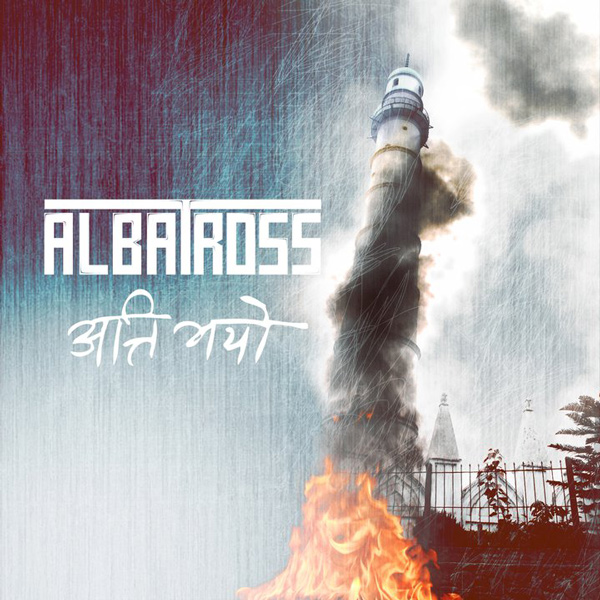
     

  • Atti Bhayo – Albatross

    — Apoorva Lal

    ‘Atti Bhayo’, the third studio album by the popular Nepali rock outfit Albatross, is an attempt by the band members to vent out their frustrations at all levels ‘from those in personal relationships to those which ail the entire nation. It is a sincere piece of work and has some very interesting tracks. The quality of the musicianship on the album is high, and there are some songs that are likely to garner many listens. However, the album is rather inconsistent because of some less-than-memorable tracks and some unnatural and forced sounding material. It also suffers from a serious lack of experimentation, resulting in music that is pleasant when heard and pleasantly forgotten. However despite some of these elements that depress the quality of the album, this is still a solid piece of work and the quality and energy that Albatross bring to this album and their live performances have turned them into a respected name in the Nepali rock scene.

    Songwriting on this album is fairly straightforward because of the theme; songs do not linger on abstraction and instead vent out frustration in simple words and phrases. A good example of this would be the song ‘Chaina’ (which was also released as a music video on youtube.) It received a pretty positive response, in which vocalist Shirish Dali shouts ‘Chaina, kehi nai chaina’ (Nothing, there is nothing). However, because of the straightforward songwriting, lyrics are seldom poetic and memorable.

    The quality of individual songs fluctuate, making the album an unpredictable and not totally gratifying ride. Some tracks like ‘Shristi ra Drishti’ and ‘Chaina’ sound excellent from the very first listen. ‘Shristi ra Drishti’ has a dynamic intro section that seems to flow and merge seamlessly into a well sung verse and chorus. The acoustic guitar-work on this song is especially notable on this track because of interesting rhythm playing and creative harmonisation between the electric and acoustic guitars throughout the song. The wah-pedal solo in which guitarist Sunny Manandhar uses his guitar cable as an instrument is very innovative and clearly shows his Morello influences.  ‘Chaina’ is an anthem that contains a powerful chorus and a lot of aggression. On the other hand, some tracks like ‘Nischal’ start off very well with a melodic intro but are spoilt by vocals that sound extremely unnatural and clearly quite forced (and somewhat constipated). Despite the unnatural vocal dynamics, the guitar-work on the track is quite noteworthy; it contains sections with Manandhar’s tasteful fills and arpeggios as well as a melodic chord progression played on the acoustic.

    In stark contrast to some of these original and memorable songs, some songs clearly sound heavily influenced and fail to make an impression. The song ‘Janata ma Appeal’ (which contains lyrics by Bhimnidhi Tiwari) is so heavily influenced by Rage Against The Machine that the band’s originality seems to be compromised. Another RATM influenced song, ‘Kahile Kahi’, is the most forgettable song in the album. Its attempts at sounding dynamic and funky, ends up sounding inane and is problematic due to stiff vocals.  ‘Abhiman’, has an intro that starts off well until some completely irrelevant volume swells (one of the rare instances where Sunny Manandhar’s lead guitar work seems quite off) spoil the fun. The latter part of the song, and another similar track called ‘Jhariko Raat’ are rather mundane. The lack of consistency, quite apparent from the very first listen, does serious damage to the listener’s overall response to the album.

    The musicianship on the album is solid, and reinforces the fact that Albatross is a tight rock outfit. The guitar-work on the album is especially noteworthy, with Sunny Manadhar’s innovative electric guitar blending nicely with Shirish Dali’s tasteful acoustic playing. Manandhar uses the wah-wah pedal to excellent effect in many sections, and has a good guitar tone that adds a great deal to the album’s overall sound. His riffing is solid too, although the guitar tone seems to have been deliberately lulled because it visibly lacks meat in certain songs (The intro to ‘Janata Ma Appeal’, for example, sounds much better live, because it’s much more aggressive and distorted). Rhythm sections and harmonisation between the electric and acoustic guitars is noteworthy. The acoustic guitar is used very widely on this album, perhaps more widely than any other Albatross album.  This adds a great deal of texture to the music, although it still is nothing out of the ordinary. Some heavier riffing (closer to the Hi-Fly era material) would be welcomed by many fans who have perceived the gradual mellowing of Albatross’s sound as the Nepali equivalent of Metallica’s ‘selling-out’.

    The bass and drums are solid but quite inconspicuous. Some more experimentation with more dynamic drumming and bass sections would do a lot of good in any subsequent albums.  Shirish Dali’s vocals are very inconsistent ‘sometimes they sound great and sound absolutely horrid at other times. The problem lies in the lack of conviction that is quite apparent in parts where he is supposed to show aggression and anguish. And for an album that is based on these very feelings, half-hearted sounding vocals don’t really do much good to the band’s cause. The band experiments with dual harmonised vocals in many sections, most notably in the opening track ‘Maa’, and uses it to mediocre effect. The voices of the lead and backing vocalist do not gel, and the result is likely to receive only lukewarm appreciation.

    Overall, the album is a mixed bag and listeners are sure to be disappointed if they want an album that is gripping from the first minute onwards. It yields a couple of excellent songs, a couple of cool songs that you enjoy while listening and are likely to forget later, and a couple that you will definitely not want to go back to and listen to again. Albatross’s dedication and perseverance is admirable; they have kept going while most bands of their days have long since disbanded and disappeared. They have continued writing good material, but the quality of their material has been quite inconsistent and ‘Atti Bhayo’ is a confirmation of this fact.

    What is promising is that they can still write good songs and continue performing live and touring with the intensity that is unparalleled in the Nepali scene. However, that being said, Albatross need to experiment more and work for longer in order to make their next album more memorable than ‘Atti Bhayo’. They need to write more dynamic songs and keep pushing their own boundaries so that each new album widens the band’s horizons. ‘Atti Bhayo’ falls well short of that, and one can only hope that the next album will contain songs that are more interesting, experimental and memorable. After all, they definitely wouldn’t want to be called the ‘Farki Farki band’ throughout their career.


  • Define Mental, Redefining Music

    The Nepali underground music scene is becoming quite popular with an increase in the formation of and performances by new bands. There are many young music enthusiasts in the capital, Pokhara and indeed all around the country. Four enthusiastic musicians from White House College who previously jammed just for college functions, decided to continue making music together. And with that thought the band – ‘Define Mental’ came into being. First performing one year back at an underground gig, Define Metal has since taken part in band competitions, including a win at last years Qmost of the gigs organised by the local scene.

    Here, we catch up with the bassist of the band, Prashant Maharjan, for a quick glimpse into the start of Define Mental’s short career.

    [quote_right]
    Members:
    Samyam Shrestha ( Session Vocals) Dipesh Shrestha (Guitars)
    Yudhir Gautam (Guitars)
    Prashant Maharjan (Bass)
    Surya Pun (Drums)
    Past member:
    Sulav Nepal (Vocals)
    [/quote_right]

    How did you come up with the band name?

    The band name came up an interesting and an easy way. We were just watching Shutter Island and then on a particular scene there’s a line with ‘define mental’, so, there you are.

    What type of band are you?

    Well, we haven’t exactly specified a genre for our band as we are experimenting with different sub genres of Death Metal. Each song we compose is different in one way or the other so I think it is a bit too early to be genre specific.

    What are your major influences?

    There are too many to mention actually. All of us have similar influences but if we have to name, Decapitated and Dying Fetus would be the first two names that will hit our head.

    Who writes the songs?

    As far as lyrics is concerned Sulav (our previous vocalist) was responsible, but now he has left for India. So right now we’re auditioning new vocalists who are also good with words. As far as the music is concerned, Yudhir and Dipesh (the guitarists) come up with a certain riff pattern and we improvise on them during  practice sessions.

    Any say on the importance of crowd appreciation? 

    Yes, very important keeping in mind that we’re a developing band. And as far as our performances are concerned we don’t think we have disappointed the crowd at any performance on any level. But that doesn’t mean we’re not trying to improve, we are and will certainly get better on each performance.

    Is there anybody outside the band members and crowd that have played roles in supporting the band?

    Yes, we have ktmROCKS that has been there from the very beginning with us. We also have another group Mortem; these two organizations have been organizing gigs at different periods which are always a good thing to us and other new bands.

    Have you toured outside the valley?

    No, not yet, but we are planning to play in Pokhara sometime soon and if things get better for us we will certainly go to other places too.

    What are the bands future plans?

    Right now it’s just practice and perform. We haven’t thought about anything big right now, but we are working on originals to come up with an EP (soon – hopefully).

    At last, is there anything you’d like the readers to know?

    Just want to say that you are the people, so, support your local scene, support the bands, and support the music. That’s pretty much it.


  • Upiano

    There is a growing movement of music and musicians that is undoubtedly becoming a phenomenon here in Kathmandu. This diverse emerging trend has started becoming noticed as more and more artists refuse to limit themselves in a particular genre. It is welcoming to see that listeners also are appreciating such efforts by artists to overcome the monotony that has been felt from cover-only live bands.
    [quote_left]
    Members:
    Upendra Lal Singh
    Piano/Keyboard
    Roshan Kansakar
    Bass
    Babu Raja Maharjan
    Percussions
    Raman Maharjan
    Flute
    [/quote_left]
    Upendra and Friends is one such group that has chosen to break traditional boundaries by performing folk tunes with the exception that the popular western instruments, the bass guitar and piano, blend with the flute and the percussive elements to create a unique ‘nostalgic’ sound. Upendra Lal Singh, on piano, has transcribed a whole range of folk songs over a whole range of cultures into recognisable melodies that one might have heard on the radio or someone might have sung; basically a repertoire of tunes showcasing the rich musical background of our traditional musical culture.

    They have been invited to play at the Fuji Rock Festival this year in Naeba, Japan. It is one of the world’s biggest rock festivals and brings in crowds 150,000 over 3 days in several stages around the Ski Resort. Some of the bands featured this year are Coldplay, Arctic Monkeys, The Chemical Brothers, Incubus, Wilco and Asian Dub Foundation.

    In 2004, Hiraka Sang, the organiser of Fuji Rock Festival, came to Kathmandu with a plan of organising an open concert; Upendra Lal Singh luckily met him through a mutual friend and conversed about the audience’s choices for music. Upendra gifted him his CDs and soon Hiraka Sang became impressed and invited him to participate in Fuji Rock Festival. Since then, Upendra Lal Singh has been appearing in the annual festival.

    Having been a renowned piano player in Nepal for more than two decades, band leader Upendra Lal Singh is no stranger to the instrument. Many say that his take on folk music is one that revives the oldies and classic tunes but with an approach that looks at the music from a different view: the music is still alive and he has chosen to express it in a special way with improvisation. Being an avid fan of jazz and blues, which he cites as his main influences, he is aware about making the music interesting and including improvisations live. ‘Keith Jarret!’ he replied, ‘and all other pianists, I could go on and on’, when I asked him to name a few of his influences.

    Upendra has studied piano in Bangkok for 8 years. It is there that he says, he learned the importance of having to swallow his pride and start from basics. ‘You might know a lot of tunes, but if you don’t have ideas about the basics you cannot evolve in your musical venture.’ Having been offered opportunities in Bangkok, he chose rather to come back to Nepal and teach here in order to participate in the progress of Nepali music. It is in his work that his contribution to the already rich Nepali musical culture seen. Like for instance, in his third album, Nostalgia (2010), he has recorded pieces such as ‘Malai Maaf Garideu’ (Gopal Yonjon) and the traditional tune ‘Resham Firiri’. He says it is in expressing tunes such as these that he feels proud because there are so many ways to present them. In live situations, as seen in the performances with Upendra and Friends in different venues in Kathmandu, he is not afraid to play tunes even with a DJ. The presentation of familiar songs by this band is commendable. Surely as they have been doing annually, they will keep traditions alive and kicking in the land of the rising sun.

    [minigallery link=”file” order=”DESC” columns=”2″]